ServicesWhole-house carbon filtration
Whole-House Carbon Filtration in Hutchins
We install carbon filtration where the water line enters your home, so showers, the kitchen tap and the laundry all lose the chlorine smell. Each system is sized to your flow rate and to the disinfectant your utility uses. Fresh media then lasts its full rated life instead of wearing out early.
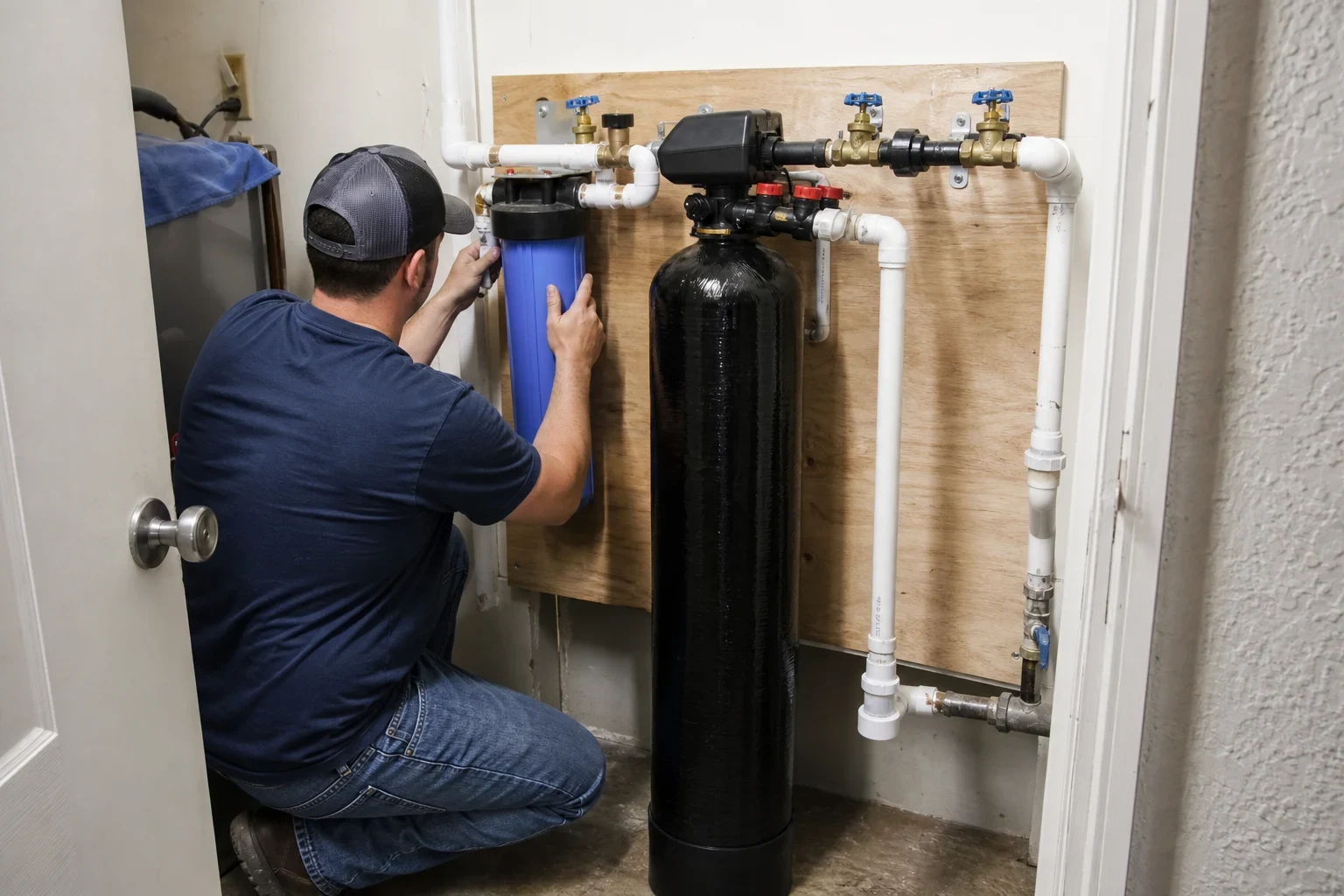
What a Whole-House Carbon System Does
Activated carbon is charcoal processed until it is full of microscopic pores. As water passes through a bed of it, chlorine and many organic compounds stick to the carbon surface or break down on contact. That removes the pool smell and the flat chemical taste. It also helps with some odors that come from organic matter.
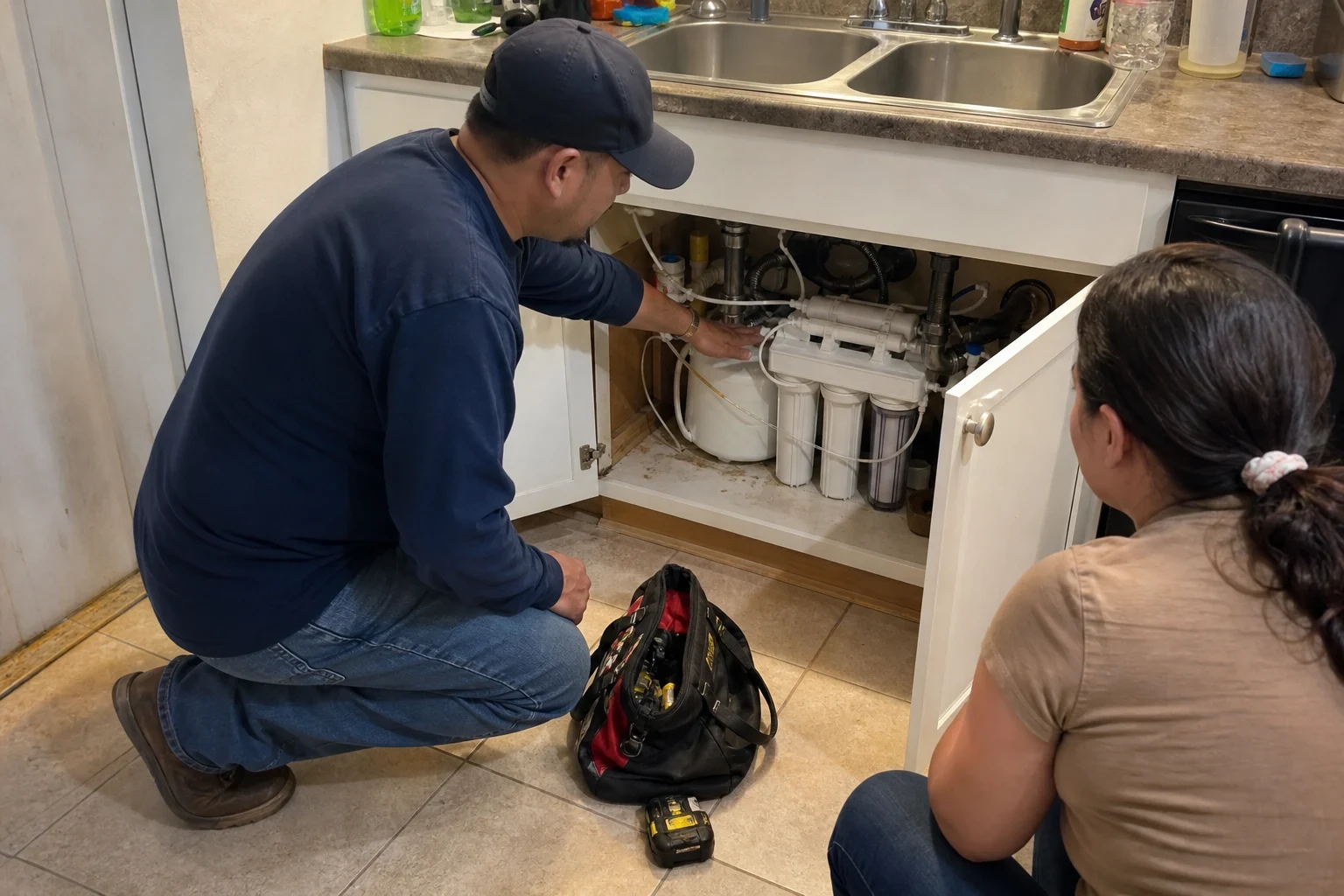
Carbon is the right call when the water is safe but unpleasant, and the complaint shows up at every tap rather than just the kitchen. It does not soften water, and it is not our first choice for lead or heavy iron. If those are your concerns, we will point you toward water testing, iron and sediment filtration or under-sink reverse osmosis instead.
Most municipal water in North Texas is disinfected with chlorine or chloramine. Chloramine is more stable and needs catalytic carbon and longer contact time to remove. We confirm which one reaches your home before choosing media. That one step decides whether the system lasts years or months.
What the Installation Includes
- Disinfectant and flow check
- We confirm chlorine or chloramine and measure your home's peak demand in gallons per minute. Those two numbers set the tank size and media type.
- Sediment prefilter
- Before water reaches the carbon, it passes through a fine sediment cartridge that traps sand, rust flakes and loose scale. Left unfiltered, those particles coat the carbon granules and end media life long before the carbon itself is used up.
- Carbon tank or housing
- Larger homes usually get an upflow or backwashing tank of granular activated carbon. Smaller homes with modest flow can use large-format cartridge housings, which cost less up front but need more frequent changes.
- Bypass valve and shutoffs
- We plumb a three-valve bypass so water keeps running during service, plus shutoffs on both sides of the system.
- Pressure and taste check
- After flushing the new media, we compare pressure before and after the system with gauges and check chlorine at a fixture. You see the result before we leave.
- Written upkeep schedule
- You get the expected change interval in months, based on your actual water use, so filter replacement and maintenance never comes as a surprise.
Signs Your Home Could Use Carbon Filtration
Bleach smell in the shower
Chlorine escapes warm water as a gas, which is why a steamy bathroom with the door shut smells the strongest. A pitcher filter on the counter does nothing for the shower head.
Chemical taste at every tap
If the bathroom sink tastes as off as the kitchen, the issue is the supply. A point-of-use filter would only fix one faucet.
Dry skin and faded fabrics
Chlorine is an oxidizer. Some people notice tight skin after showering, and some fabrics fade faster with repeated washing in chlorinated water.
Cartridges that clog quickly
If an existing carbon filter loses pressure within weeks, it is probably undersized or missing a sediment prefilter. Both are common and fixable.
Musty or earthy odors
Seasonal earthy smells often come from organic compounds that carbon adsorbs well. We test first so we know that is the cause.
How Installation Day Runs
- 1
Confirm water and location
We walk the main line, usually in the garage or near the water heater, and recheck the disinfectant. Then we pick a spot with drain access if the tank backwashes.
- 2
Shut off and cut in
Water is off for a few hours. We cut into the main line, install the bypass, prefilter and carbon unit, and secure everything to the wall or a level pad.
- 3
Flush the media
New carbon releases fine dust, so we flush it to a drain until the water runs clear. This also settles the bed so water contacts all of the media evenly.
- 4
Test and walk you through it
We check pressure and chlorine, show you the bypass valves, and leave the work area swept. You also get the change schedule in writing.
What Sets the Price
A carbon system's real cost is the installed price plus every media change over its life. A cheaper cartridge setup can cost more over ten years than a tank that runs for years between changes. We price both options so you can compare them side by side.
- Tank versus cartridges
- Tanks cost more to install but hold far more media. Cartridge housings are cheaper up front with more frequent replacements.
- Standard or catalytic carbon
- Chloramine needs catalytic carbon, which costs more per cubic foot and often a larger tank for adequate contact time.
- Household size and flow
- More bathrooms and higher peak flow mean more media to avoid pressure loss and early breakthrough.
- Plumbing access
- An open garage wall is simple. A main line under a slab or behind finished drywall takes more labor and fittings.
Carbon Filtration Questions
Something not covered here? (972) 954-6119
Will a carbon filter remove chloramine?
Yes, if it uses catalytic carbon and is sized for enough contact time. Standard carbon removes chloramine slowly and runs out early. We confirm your disinfectant before quoting.
How long does the carbon last?
Tank systems are rated by gallons treated, so a smaller household gets more years from the same tank. Cartridges are changed more often. Your written schedule is based on your actual use.
Will it lower my water pressure?
A correctly sized system causes only a small pressure drop, which we measure with gauges at installation. Noticeable loss usually means the unit is undersized or the prefilter is clogged.
Does carbon soften water or remove lead?
It does not soften water. Some carbon blocks reduce lead, but for drinking water we usually recommend under-sink reverse osmosis. If you suspect hardness, we start with a hardness test before suggesting a softener.
Do I still need a filter at the kitchen sink?
Many homes are happy with carbon alone. If you want a further step for drinking and cooking water, a small reverse osmosis unit under the sink is the usual pairing.
Find Out Which Carbon System Fits Your Home
Tell us how many people live in your home and what you notice at the tap. We will explain tank and cartridge options, including what each costs to keep running.