ServicesWater testing
Water Testing in Hutchins
Before you spend money on filtration equipment, find out what your water actually carries. We measure hardness, iron, chlorine, pH and dissolved solids at your taps, then give you a plain answer on which treatment, if any, earns its place in your home.
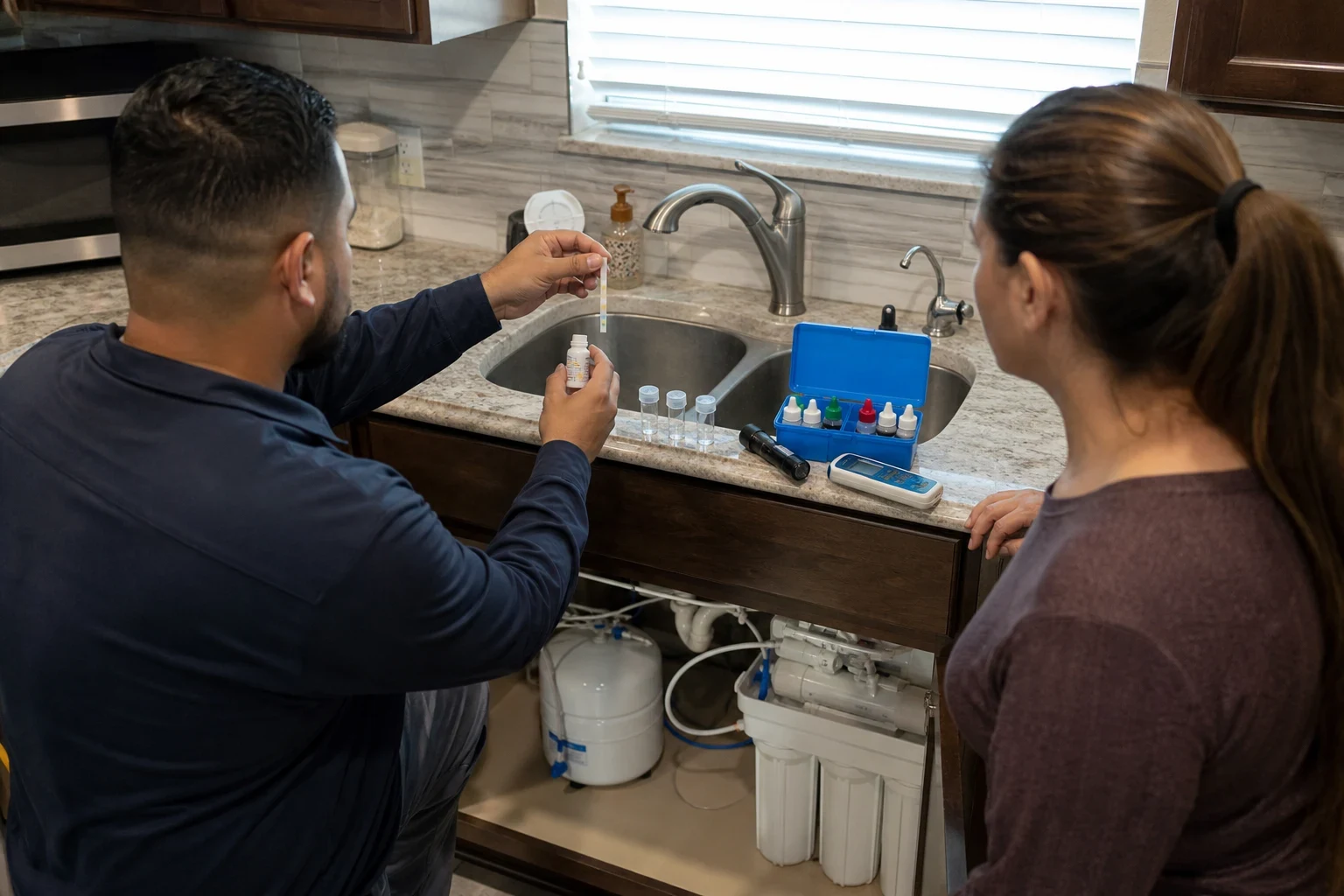
Numbers first, equipment second
Most filtration mistakes start with a guess. A softener goes in because the shower glass looks spotty, or a big carbon tank gets sized for a problem the water never had. Both cost money up front, and both keep costing money in salt, media and cartridges for years. A test tells you which problem you actually have, so the system you buy is the smallest one that solves it.
We run the quick readings in your kitchen and send anything that needs lab precision, like lead or bacteria, to an independent laboratory. Then we sit down with the results and explain each number: what it measures, what level matters, and what it means for your pipes, fixtures and drinking water.
If the readings come back clean, we say so. A pitcher filter, or no treatment at all, may be the right call, and that is what we will recommend.
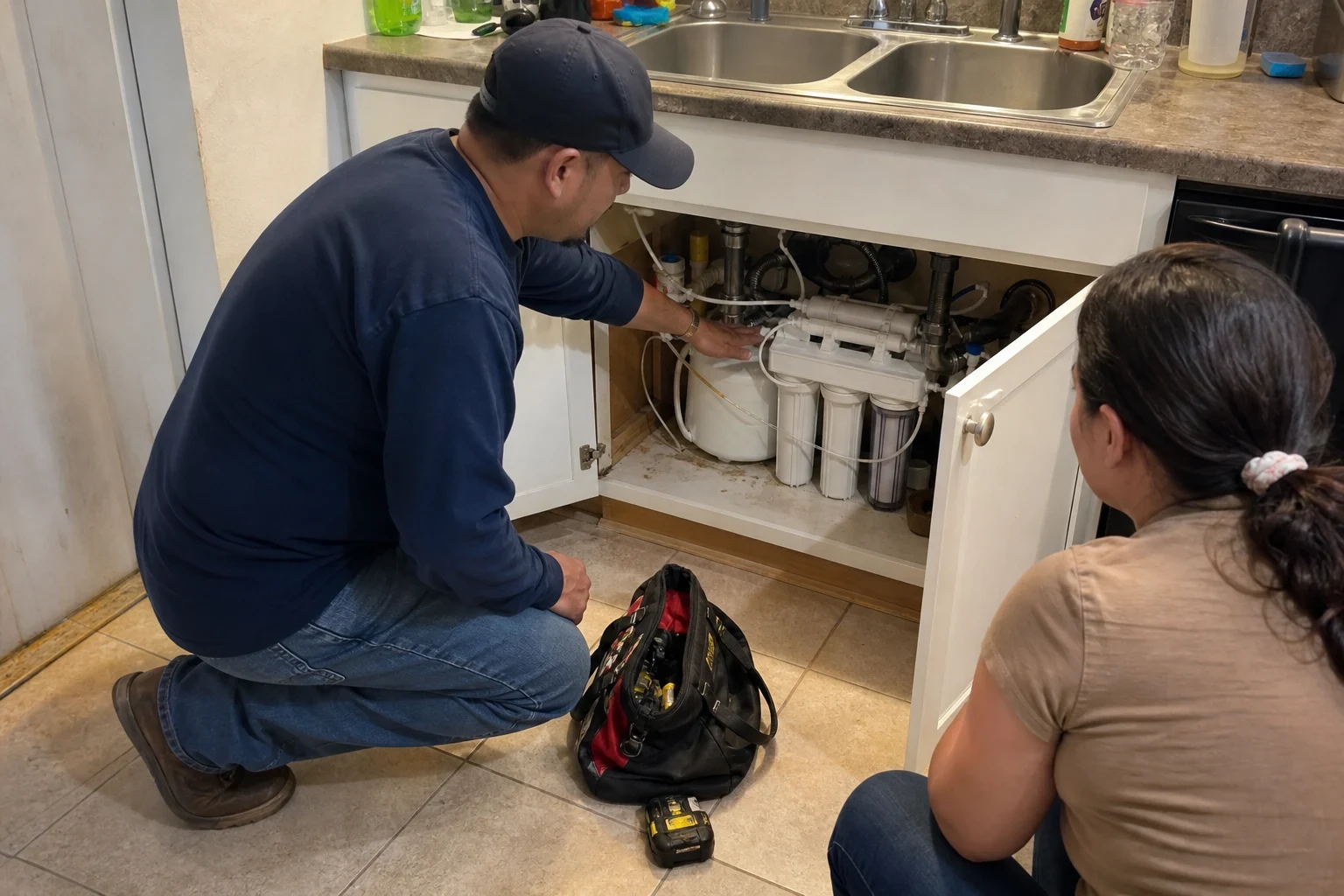
What a water test covers
- 01
Hardness in grains per gallon
Calcium and magnesium are what leave white scale on faucet aerators and inside water heaters. We measure hardness in grains per gallon because that number decides whether a softener pays for itself or just burns salt.
- 02
Iron and manganese
Iron above about 0.3 ppm starts to leave orange stains on porcelain and laundry, and manganese leaves black or brown ones. We measure both, since they call for different media than hardness does.
- 03
Chlorine residual and pH
Treated city water carries a disinfectant residual that you can taste and smell. We read the residual and the pH together, because pH affects both how corrosive the water is to copper and how well a carbon filter works.
- 04
Total dissolved solids
A TDS meter gives a quick read on everything dissolved in the water. It does not name the contaminants, but it gives us a baseline to check a reverse osmosis system against later.
- 05
Lead and lab panels
Lead usually comes from household plumbing, not the supply, so we take a first-draw sample from the tap after the water has sat overnight and send it to a lab. Private well owners can add bacteria and nitrate testing to the same visit.
Questions about Water testing?
Call(972) 954-6119Signs it is time to test your water
Scale on fixtures and heating elements
Crusty buildup on showerheads, a rumbling water heater or spots that will not wipe off glassware point to hardness. A test tells you how much, which decides whether softening is worth it.
Rust-colored stains
Orange rings in the toilet bowl or tinted laundry usually mean iron, either in the water or from corroding galvanized pipe. Testing at more than one tap helps us tell which.
A pool or bleach smell
A strong chlorine taste often sends people to bottled water. Knowing the residual helps us size a carbon filter so it lasts its full rated life.
An older home or new pipes
Homes plumbed before 1986, when federal rules banned lead solder in drinking water lines, can pick up lead at soldered copper joints, most of all when water stands in the pipes overnight. A recent repair or a new faucet is another good reason to check again.
You are about to buy a system
If someone has quoted you a softener or whole-house system without testing first, get the numbers before you sign. It costs far less than the wrong equipment.
How a testing visit runs
- 1
Short phone conversation
We ask about the stains, tastes or smells you have seen, the age of the home and if your water comes from the city supply or a private well. That tells us which tests to bring and if a lab sample is worth adding.
- 2
Samples at the tap
We draw from the kitchen faucet and, when it helps, a bathroom tap and the line before the water heater. Hardness, iron, chlorine, pH and TDS are read on the spot so you watch the numbers come up.
- 3
Lab work where it matters
Lead, bacteria and other trace items go to an independent lab in sealed bottles with the sampling time recorded. Lab results take longer than kitchen readings, and we follow up when they arrive.
- 4
Results and a written recommendation
We go through each reading against the level that matters, then write down what we would install, what it costs to maintain each year and how long the media lasts. If nothing is needed, the page says so.
What sets the price of a water test
A basic on-site panel is the simplest visit. The price rises with how many lab analyses you add and how many taps we sample. We quote the exact scope by phone before we come out, so you know what you are paying for.
- On-site panel or lab analysis
- Kitchen readings use meters and reagent kits. Lab tests for lead, bacteria or specific metals add lab fees and shipping.
- Municipal supply or a well
- Homes on a private well should add a bacteria and nitrate check to the mineral readings, and those lab analyses raise the total.
- Number of sample points
- Testing at the street-side line and at the tap separately helps pin down whether a problem comes from the supply or your plumbing, but each point adds work.
- Retesting after installation
- A follow-up test confirms a new filter or softener is doing its job. Planning it with the first visit keeps it simple.
Water testing questions
Can I just use a test strip from the hardware store?
A hardware-store strip gives a ballpark reading on hardness or chlorine. Its color scale gets hard to read at low levels, and it cannot measure lead with any reliability. When the equipment you choose will run for a decade, measured numbers are worth having.
Do I need a water softener in Hutchins?
Not automatically. It depends on the hardness measured at your tap, and some homes do not have enough to justify the salt and upkeep. We test first and only recommend a softener when the number supports it.
When will I see the lab report?
The meter and reagent numbers are in hand before we pack up and leave your kitchen. Bottles sent to the laboratory follow the lab's own schedule, usually anywhere from a few days to about two weeks depending on the analysis. Once the report reaches us, we go over every figure with you and what it means for your plumbing.
Will you try to sell me a system after the test?
We will tell you what the numbers suggest, and that might be a whole-house carbon filter, under-sink reverse osmosis, iron filtration or nothing. You get the recommendation in writing with yearly upkeep costs, and there is no pressure to decide that day.
How often should I retest?
Once a year is reasonable for private wells. On city water, retest after plumbing work, if taste or staining changes, or to confirm a filter is still working before its cartridge is due.
Find out what is in your water
We work in Hutchins and nearby towns including Lancaster, Wilmer and DeSoto. Describe what you see, taste or smell, and we will pick the tests that fit your home.