ServicesWater softeners
Water Softener Installation in Hutchins, Sized to Your Test Results
A softener should match a measured number, not a guess. We read calcium and magnesium in grains per gallon at your tap, then size the resin tank and set regeneration to the water your home actually uses. If the reading is too low to justify the salt and upkeep, we say so.
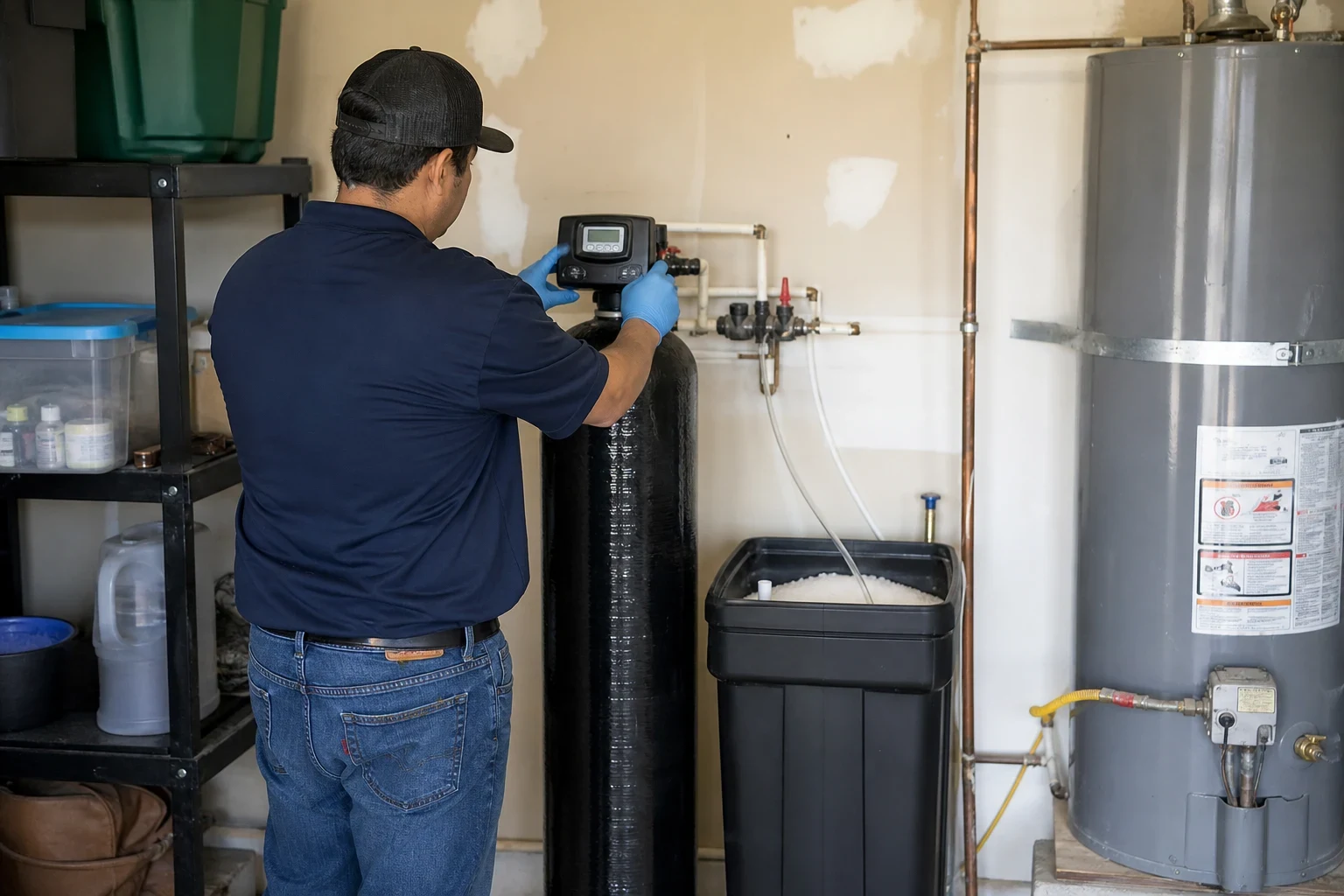
A softener is the right call only when the numbers say so
Hard water carries dissolved calcium and magnesium. When it heats up in a water heater or sits on a fixture and dries, those minerals drop out as scale. A softener removes them through ion exchange. Water passes through a tank of resin beads that hold sodium or potassium ions, and the beads trade those for the hardness minerals.
That works well, but it has running costs. Salt, the water used during regeneration and eventually new resin all add up. If your hardness is low, those costs can outweigh what you save on scale. That's why every softener job we do starts with a test of your water, not a sales pitch.
When the test points another way, such as iron staining or a chlorine taste, we'll tell you so and suggest iron and sediment filtration or whole-house carbon filtration instead.
What goes into a properly sized softener
- Hardness reading plus iron check
- Before anything is ordered, we take a grains-per-gallon reading and check iron on the same sample. Iron coats resin beads, so both results together decide whether a softener belongs in your home and which type.
- Grain load math
- Hardness times daily gallons gives the grain load the resin has to handle. From that we choose a resin volume that can go several days between regenerations without burning extra salt.
- Demand-initiated control valve
- Our preference is a valve that meters gallons and regenerates only when the resin is near capacity. A clock-based timer cycles on schedule even during a week you were away, which adds up to wasted salt and water over the years.
- Bypass, drain and overflow
- A bypass valve lets you isolate the softener for service without shutting off the house. The drain line gets a proper air gap, the brine tank gets an overflow line, and the floor around the unit is covered while we work.
- Programming and owner basics
- The valve is set to your measured hardness and the brine tank is filled. Before we leave, you'll know how to read the salt level and how to break up a salt bridge if one forms.
When hardness might be worth treating
Scale on aerators and showerheads
A chalky white ring of calcium carbonate forms wherever water drips and dries. If it returns within a few weeks of scrubbing, hardness is a likely suspect.
Spotted glassware
Minerals stay behind when droplets evaporate. Cloudy glasses straight out of the dishwasher are often the first thing people notice.
A rumbling water heater
Popping sounds from a tank heater usually mean scale has settled on the bottom. That layer sits between the burner and the water, so the heater works harder for the same hot water.
Weak lather
Calcium and magnesium bind with soap and leave scum instead of suds. You end up using more shampoo, detergent and dish soap.
Parts that clog early
Faucet cartridges, toilet fill valves and appliance inlet screens that clog or wear out ahead of schedule can trace back to scale. A test tells you whether hardness is really behind it.
How a softener job runs
- 1
Measure before anything else
We draw water from a tap in your home and walk through the hardness and iron readings with you right there. If the numbers don't support a softener, that's where the visit stops, with a straight answer.
- 2
Written estimate
If they do, you get a line-item estimate covering the unit, resin volume, valve type, fittings and labor. We also give you a plain estimate of yearly salt use.
- 3
Tying into your supply
The softener belongs at the point where water first comes into the house, ahead of the water heater. With the supply valve closed, we plumb in the bypass, set the resin tank and brine tank side by side and run the drain line. In most homes, the taps are flowing again before we pack up.
- 4
Programming and cleanup
We set the valve to your hardness, run a first regeneration, check every joint for leaks and clean up the work area before we leave.
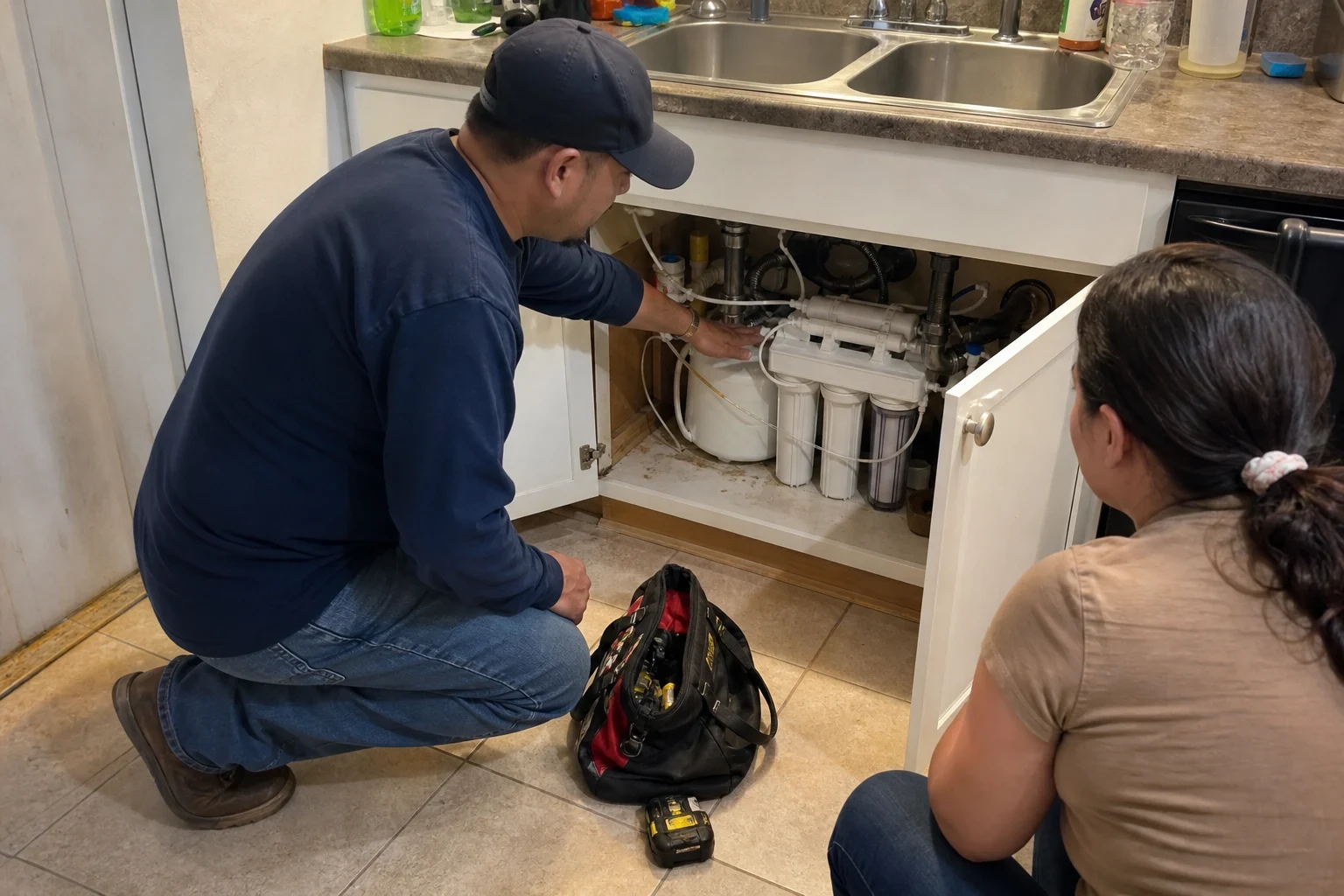
What moves the cost, now and over time
A softener's price on day one is only part of what you pay. Salt, regeneration water and resin replacement keep costing money for as long as it runs. We price both so you can compare options fairly before you commit.
- Hardness and grain load
- Harder water and more people mean a larger resin tank and more salt. Measuring keeps us from oversizing, which wastes money up front, or undersizing, which wastes salt later.
- Valve type
- A metered valve costs more than a timer at purchase. It usually pays that back through lower salt and water use.
- Plumbing access
- An easy main line in a garage is quicker than a line in a tight closet or one that needs rerouting. Adding a drain or an outlet for the valve also adds labor.
- Salt choice
- Sodium chloride is the cheaper ongoing choice. Potassium chloride costs more per bag but adds no sodium to the water.
- Pretreatment needs
- Chlorine slowly breaks down resin, and iron coats it. If your water has either, a carbon or iron prefilter can add cost now but protect the resin for years.
Water softener questions
Something not covered here? (972) 954-6119
Do I really need a softener?
Not always, and that's why we test first. Mild hardness may only cause minor spotting, and a softener's ongoing salt cost may not be worth it. We show you the number and let you decide with real information.
Will softened water taste salty?
At typical hardness levels, the sodium a softener adds is small, and most people don't notice it. If you'd rather skip it, potassium chloride can go in the brine tank in place of sodium chloride. Some households also put under-sink reverse osmosis at the kitchen faucet, which strips most of that sodium out of the water used for drinking and cooking.
How much salt will I go through?
It depends on three things: your measured hardness, the number of people in your home and the capacity of the brine tank. Lifting the lid once a month is usually enough to keep track. Top it up when the salt drops below the waterline, and expect to use roughly the yearly figure we give you when we size the unit.
Does a softener remove chlorine or iron?
A softener is built to remove hardness. It can handle small amounts of iron, but heavier iron fouls the resin, and chlorine wears it down. For those problems we recommend iron and sediment filtration or whole-house carbon filtration, sometimes ahead of the softener.
Who maintains it after installation?
You can handle the salt yourself. For resin cleaning, valve checks and prefilter changes, our filter replacement and maintenance service keeps the unit running efficiently.
See what a softener would really cost to own
We'll take a hardness reading and lay out the purchase price next to the yearly salt and water a unit would use, so the choice is yours to make with the numbers in hand. We work in Hutchins, Lancaster, Wilmer and the surrounding towns.