ServicesFilter replacement and maintenance
Filter Replacement and Maintenance in Hutchins
We change cartridges, RO membranes and seals on the system you already own, check the pressure and water quality coming out of it, and tell you when the next change is really due. Steady upkeep is cheaper than replacing a membrane or housing that failed early.
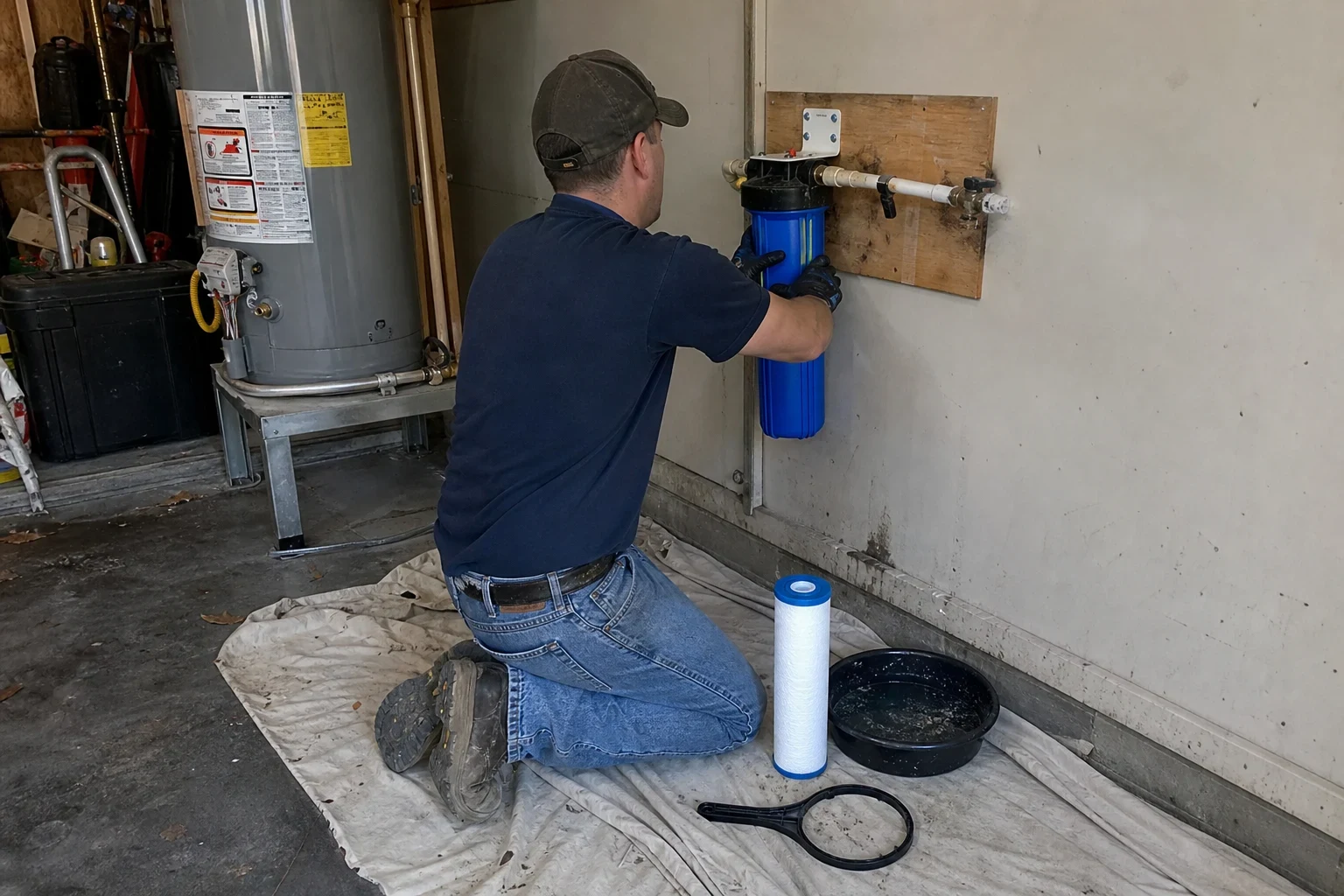
Why upkeep decides what a filter system costs you
Every filtration system has a part that wears out on purpose. Sediment cartridges load up with grit, carbon runs out of adsorption sites, and an RO membrane fouls as it rejects dissolved solids. Once a cartridge is spent it stops protecting the stage behind it, and that stage is usually the most expensive one.
That is the real math of ownership. A sediment prefilter is a small line item. The RO membrane or carbon tank it guards costs several times more. We plan changes around how your water and your household use actually wear the media, not just a sticker date, so you replace parts when they are done and not long after.
What a service call covers
New cartridges that fit your housings
Every replacement sediment, carbon block or polishing cartridge matches the length, diameter and micron rating your housings call for. If a cartridge runs even a little short, water bypasses the media rather than passing through it.
RO membrane rejection test
With a handheld meter we read total dissolved solids going into and coming out of the RO membrane. The rejection percentage tells us if the membrane still has life or is passing too much through.
Sump and O-ring check
We wipe out each sump, look over its O-ring for cracks or flattened spots and give it a thin coat of food-grade silicone. A slow leak at the threads nearly always comes from an O-ring that has dried out or been pinched.
Sanitized housings and tubing
With the system open, we sanitize the sumps and RO tubing so bacteria left in the old housing cannot spread into the fresh media.
Pressure and tank checks
We measure pressure on both sides of whole-house filters and check the air charge in the RO storage tank. When that tank is short on air, the drinking faucet runs weak even if the membrane is in good shape.
Softener review, where there is one
We check the brine tank for salt bridges, go over the control valve settings and make sure the unit is regenerating on schedule.
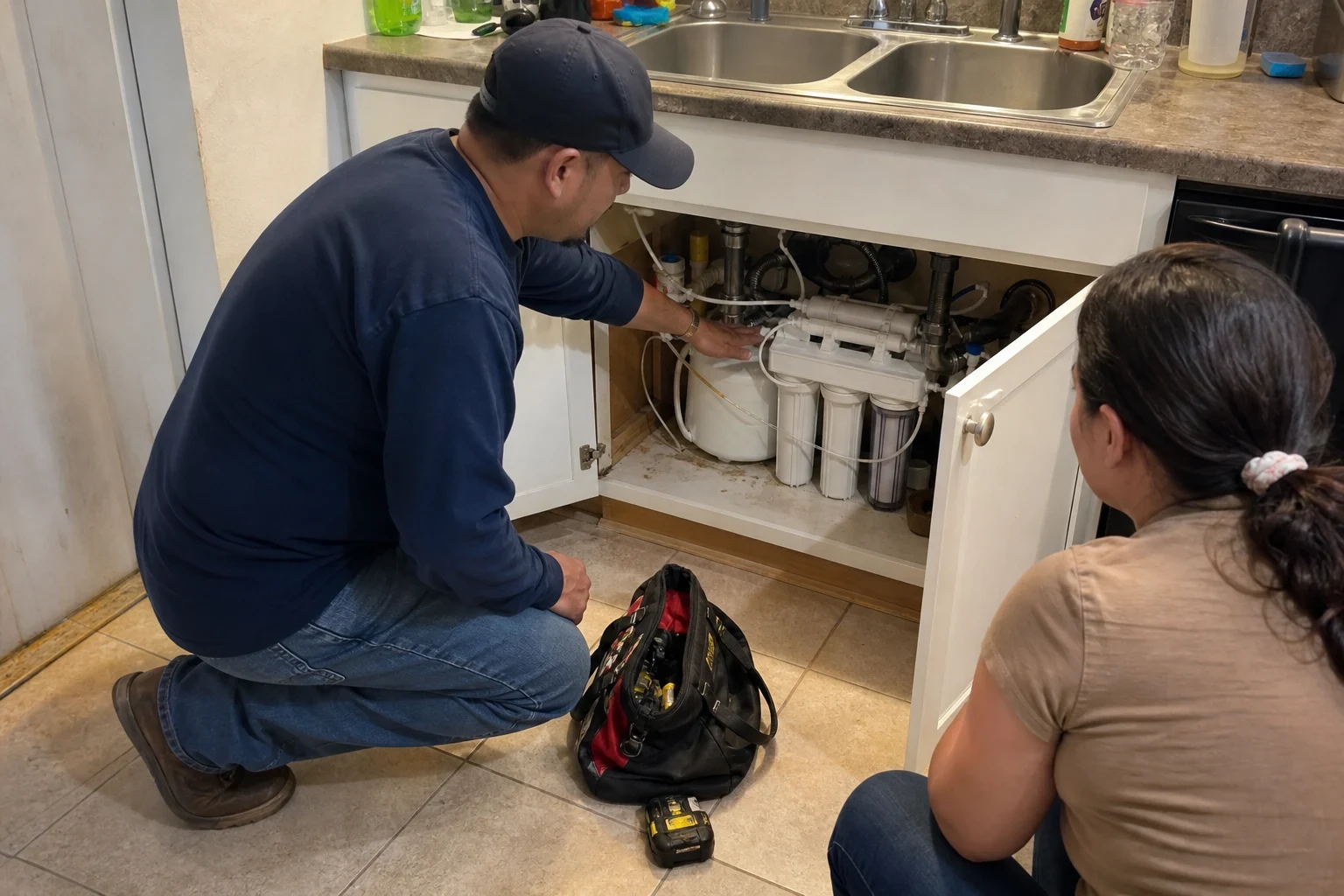
Signs your filters are overdue
- Weaker flow at the taps
- As a sediment or carbon cartridge packs with particles, less water can squeeze through it. When the shower lost strength slowly over a few months instead of all at once, a loaded filter is a likely cause.
- Chlorine taste is back
- Carbon that has used up its capacity stops removing chlorine. The taste returning is a clear sign the media is spent.
- RO faucet runs slow
- A fouled membrane or a tank that lost its air charge both slow the drinking water tap. We test to tell which one it is.
- Drips at a housing
- Moisture at the cap or sump usually points to a worn O-ring. Caught early, it is a cheap fix instead of water damage under a sink.
- You cannot remember the last change
- If no one wrote down the date, assume the media is past its useful life. We label every housing with the date we serviced it.
How a service visit runs
- 1
Find your system
On the phone we ask for the brand, model and how many housings you have so we bring the right cartridges and membranes.
- 2
Test before we touch anything
We take pressure and TDS readings first. That baseline shows how worn the old media was and helps set your next interval.
- 3
Shut off, drain and replace
We close the supply or bypass valve, relieve pressure, drain the housings and fit new cartridges with fresh O-ring lubricant. Towels and a drip pan stay under the work area.
- 4
Flush and recheck
New carbon gets flushed to clear fines, and the RO system purges its first tank. We recheck pressure, TDS and every seal for leaks.
- 5
Set the next date
You get a written note of what we replaced and when the next change should come, based on your readings and usage.
Where the money goes on a service visit
Parts make up the bulk of a maintenance bill, so the price follows what your particular system takes. Before we come out, we go over a line-item estimate with you by phone that lists the parts we expect to change. If something unplanned turns up, such as a cracked sump, we show it to you and get your OK first.
- Type of system
- A single under-sink cartridge is a short job. A whole-house setup with a sediment stage, carbon tank and softener has more parts to service.
- Membrane condition
- If the TDS reading shows the RO membrane is spent, it adds to the visit. Regular prefilter changes stretch membrane life, which lowers the cost over years.
- Cartridge brand and format
- Some systems take standard-size cartridges with many options. Proprietary twist-in cartridges often cost more per change, which matters over the life of the unit.
- Worn hardware
- Cracked sumps, stuck valves or brittle tubing add parts. We point these out so you can decide whether to repair now or plan for it.
Common questions about filter upkeep
- What is the right interval between cartridge changes?
- There is no single number, because the media type and how much water your home runs through it both matter. Sediment prefilters tend to load up first, carbon follows, and an RO membrane outlasts both as long as its prefilters stay fresh. We base your schedule on the pressure and TDS readings from your own system rather than a one-size calendar.
- Can you service a system you did not install?
- Yes. Most under-sink and whole-house housings take standard cartridges, and we can source parts for many proprietary units. Give us the brand and model on the phone, or describe the housings, so we bring the right parts.
- Is it worth replacing my old system instead of maintaining it?
- Sometimes. If the housings are cracked, parts are discontinued or the cartridges cost more each year than a standard replacement would, we lay out both options with their upkeep costs. If the system is sound, maintaining it is usually the better value.
- Why did my water taste odd right after the change?
- New carbon can release fine black particles and a faint taste until it is flushed. We flush during the visit, but running the tap a few extra minutes the first day clears what remains.
- Do you need to shut off water to the whole house?
- For under-sink systems, only the cold line to that sink. For whole-house filters we use the bypass or main valve, and water is usually off for a short part of the visit.
Keep the parts that matter lasting longer
Let us know which filtration setup is in your home and roughly when it was last touched. We line up the parts and the visit ahead of time, and we can add water testing if you would like a fresh baseline.