ServicesIron and sediment filtration
Iron and Sediment Filtration in Hutchins
Rust stains in the toilet bowl, grit in faucet aerators and laundry that comes out dingy all point to iron or sediment in your water. We test first, explain what the numbers mean, then fit a filter that keeps working without constant cartridge swaps.
What Iron and Sediment Filtration Does
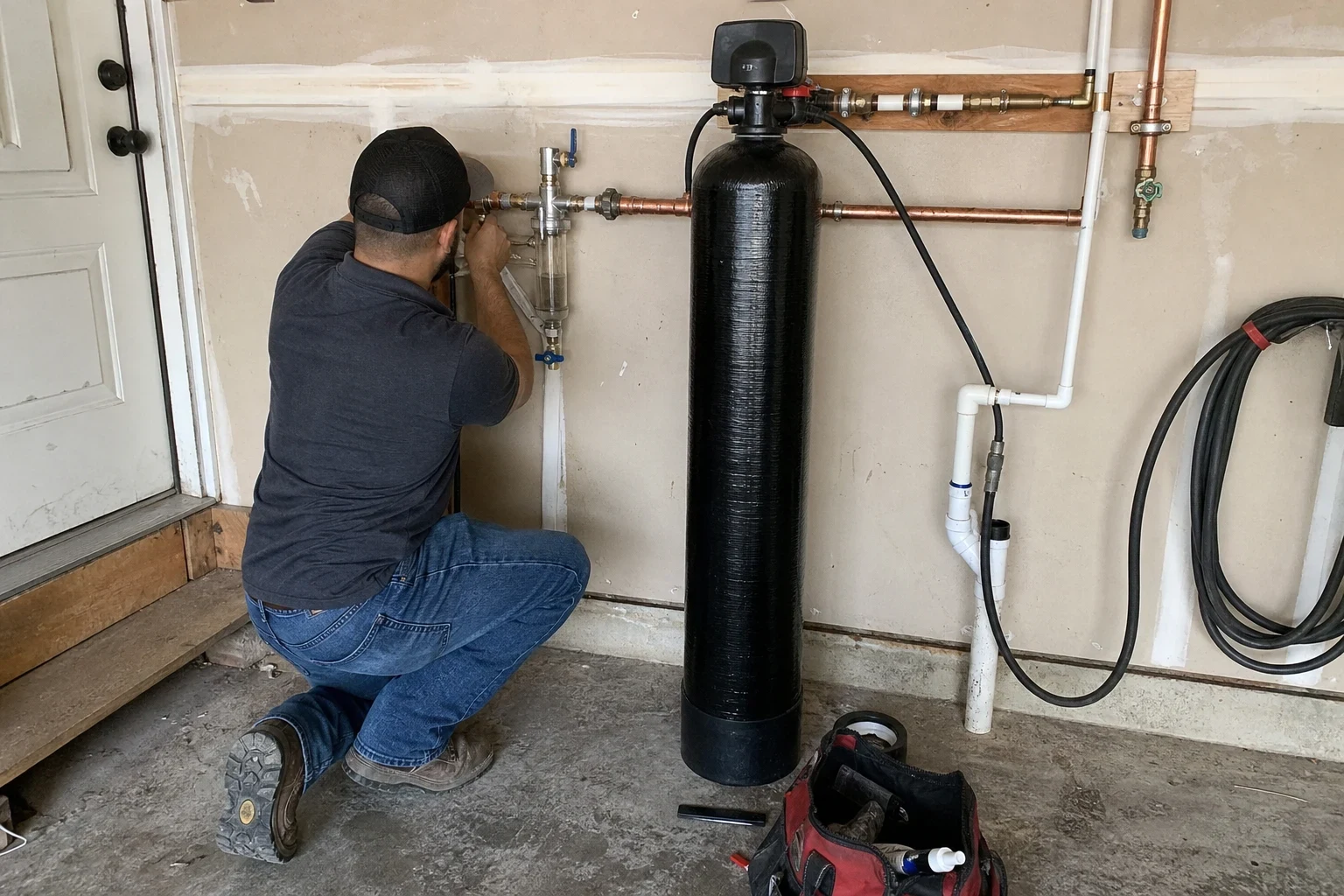
Sediment is solid material: sand, silt and flakes of scale from aging pipes or a well casing. It gets caught physically, in a washable spin-down screen or a pleated or spun polypropylene cartridge rated in microns. Iron is harder. Dissolved ferrous iron runs clear from the tap and only turns orange once it meets air in your toilet tank or shower. It has to be oxidized into a solid before any filter can hold it.
That difference decides the equipment. A cartridge housing costs little to install but clogs quickly when iron is present, so you end up buying cartridges every few weeks. A backwashing iron filter costs more on day one. It cleans itself on a timer, and its media can last for years. We lay both paths side by side, with the yearly upkeep for each, so the choice still makes sense five years from now.
What the Work Includes
Iron, manganese and pH testing
We measure iron in parts per million, along with manganese and pH. Oxidizing media such as birm only work within a certain pH range, so skipping this step is how people end up with a filter that does nothing.
Washable screen prefilter
The first stage is a see-through bowl holding a mesh screen made of stainless steel or nylon. Sand and loose scale stop there, ahead of every other part of the system. Cleaning it means opening the flush valve at the base for a few seconds, and nothing needs to be bought.
Cartridge sediment filtration
For fine silt we fit a big-blue housing with a pleated cartridge, often 20 micron first and 5 micron after. Pleated cartridges can be rinsed and reused a few times, which lowers the yearly cost.
Backwashing iron filter
For higher iron we install an air-injection oxidizing tank or a catalytic media tank with a control valve. It traps iron as rust particles, then backwashes them to a drain on a set schedule.
Bypass valve and clean plumbing
Every system goes in with a bypass so water keeps flowing during service. We use PEX or copper to match your lines and leave the work area clean.
When Iron or Sediment Is the Likely Cause
- Rust rings on porcelain
- Orange or brown marks in toilet bowls, tubs and sinks usually mean iron above about 0.3 mg/L, the federal secondary standard set for staining and taste.
- Clogged aerators and showerheads
- Sand or black specks collecting in faucet screens point to sediment, sometimes from a well or from scale breaking loose inside older galvanized pipe.
- Yellowed laundry
- Iron binds to fabric in the wash, and chlorine bleach makes the stain set harder.
- Metallic taste or cloudy first draw
- Water that tastes like a penny, or runs reddish after sitting overnight, often carries dissolved iron.
- Slime in the toilet tank
- A reddish, gel-like film can be iron bacteria. That calls for treatment beyond a simple cartridge, and we will tell you so.
How an Install Day Runs
- 1
Test and size
We confirm the water results and count bathrooms and fixtures to set the flow rate in gallons per minute. An undersized tank drops your water pressure, and an oversized one wastes backwash water.
- 2
Pick the location
The filter goes where water enters your home, ahead of the water heater. A backwashing unit also needs a drain and an outlet, so we check both before anything is cut.
- 3
Install and flush
We shut off the main, plumb in the bypass and housing or tank, then flush the media until the water runs clear. Most installs finish in a single visit.
- 4
Set the schedule and show you upkeep
We program the backwash interval to your iron level and show you how to flush the spin-down screen or change a cartridge. You also get a note on what to replace and roughly when.
What Moves the Cost
The price depends mostly on how much iron you have and what form it takes. A home with only grit needs far less equipment than one with dissolved iron and manganese. After the test we walk you through an itemized estimate by phone, with the yearly upkeep listed next to the install cost.
- Iron level and type
- Low sediment can be handled with a screen. Several ppm of dissolved iron needs an oxidizing tank, and iron bacteria may also need a pretreatment step.
- Cartridge or backwashing system
- Cartridges are cheaper to install and cost more to run when iron is high. Backwashing tanks reverse that tradeoff.
- Plumbing access and drain
- A main line in a garage near a drain is quick work. Long runs, tight closets or no nearby drain add labor and materials.
- Flow rate
- Larger homes with more bathrooms need a bigger tank and valve to keep pressure steady.
Iron and Sediment Filtration Questions
- Won't a water softener take out the iron?
- A softener's resin will swap out a little iron along with calcium and magnesium. The catch is that iron coats the resin beads and wears them out early, so you pay for new resin sooner than planned. Past low levels, a separate iron filter costs less over the life of both machines. If a hardness test shows you need a softener too, we put the iron filter ahead of it to keep the resin clean.
- I'm on city water. Do I still need this?
- Often you don't. City water usually arrives low in iron. Sediment can still come from old pipes or after main work on your street, and a simple spin-down screen may be all you need. Water testing tells us which case you are in.
- How often do cartridges need changing?
- It depends on how much your water carries. Light sediment may let a pleated cartridge last several months, while iron-heavy water can clog one in weeks. If you are changing them that often, a backwashing system usually costs less over time.
- Does backwashing waste a lot of water?
- A backwash cycle uses a measured amount of water, typically a few times a week at night. We set the interval to your actual iron level so the unit cleans only as often as it needs to.
- Can filtration clean off rust marks that are already there?
- Filtration prevents new marks; it does not lift old ones. Scrub the current stains once with a cleaner made for iron. After treated water reaches that sink or toilet, they should not return.
Get the Iron and Grit Out of Your Water
Describe the stains, specks or taste you notice and we will point you to the right test and the system that fits it. Once it is running, our filter replacement and maintenance service keeps media and cartridges on schedule.