Water Filtration in Hutchins Sized to Your Test Results
We test your water, then recommend only what the results support: whole-house carbon filtration, under-sink reverse osmosis, iron and sediment filtration, and a softener only if the measured hardness justifies it. Every quote sets install cost beside filter life and upkeep, for homes in Hutchins, Lancaster, Wilmer and DeSoto.
How We Work Before, During and After the Install
A filter that is cheap to install can cost more over ten years than one that is not. We lay out both numbers so you can choose with the full picture.
We test, then recommend
We check hardness, iron, chlorine, pH and total dissolved solids before suggesting equipment. If a softener or a whole-house system is not justified by the numbers, we say so and point you to something smaller.
Lifetime cost on every quote
Each estimate lists the equipment, the labor and the replacement cartridges or media you will buy over the years, with typical change intervals. You see what the system costs to own, not just what it costs on install day.
Parts you can actually replace
We favor housings that take standard-size cartridges, like 10-inch and 20-inch big blue filters, so you are not locked into one brand's proprietary refills. That keeps upkeep costs predictable.
Clean, careful installs
We shut off the main, drain the lines, lay down drop cloths under sinks and in garages, and pressure-test every fitting before we leave. Packaging and old cartridges leave with us.
Straight answers on maintenance
We show you how to read the pressure gauges, where the bypass valve is and what a clogged prefilter looks like, so you know when service is due and when it can wait.
Lifetime warranty on the majority of parts
The equipment we install comes with a lifetime warranty on the majority of parts. We tell you which parts it covers before you decide.
Water Treatment Services for Your Home
Water testing is where most of our work begins. Choosing equipment before measuring the water is guesswork, and a bad guess keeps charging you for cartridges and media. The readings decide what we install: whole-house carbon filtration when the problem is chlorine taste and smell, under-sink reverse osmosis for drinking and cooking water, and iron and sediment filtration when fixtures and aerators show orange stains or sandy grit. We only bring up a softener after a hardness reading supports it. Filter replacement and maintenance is also part of what we do, for systems we put in and for many installed by others.
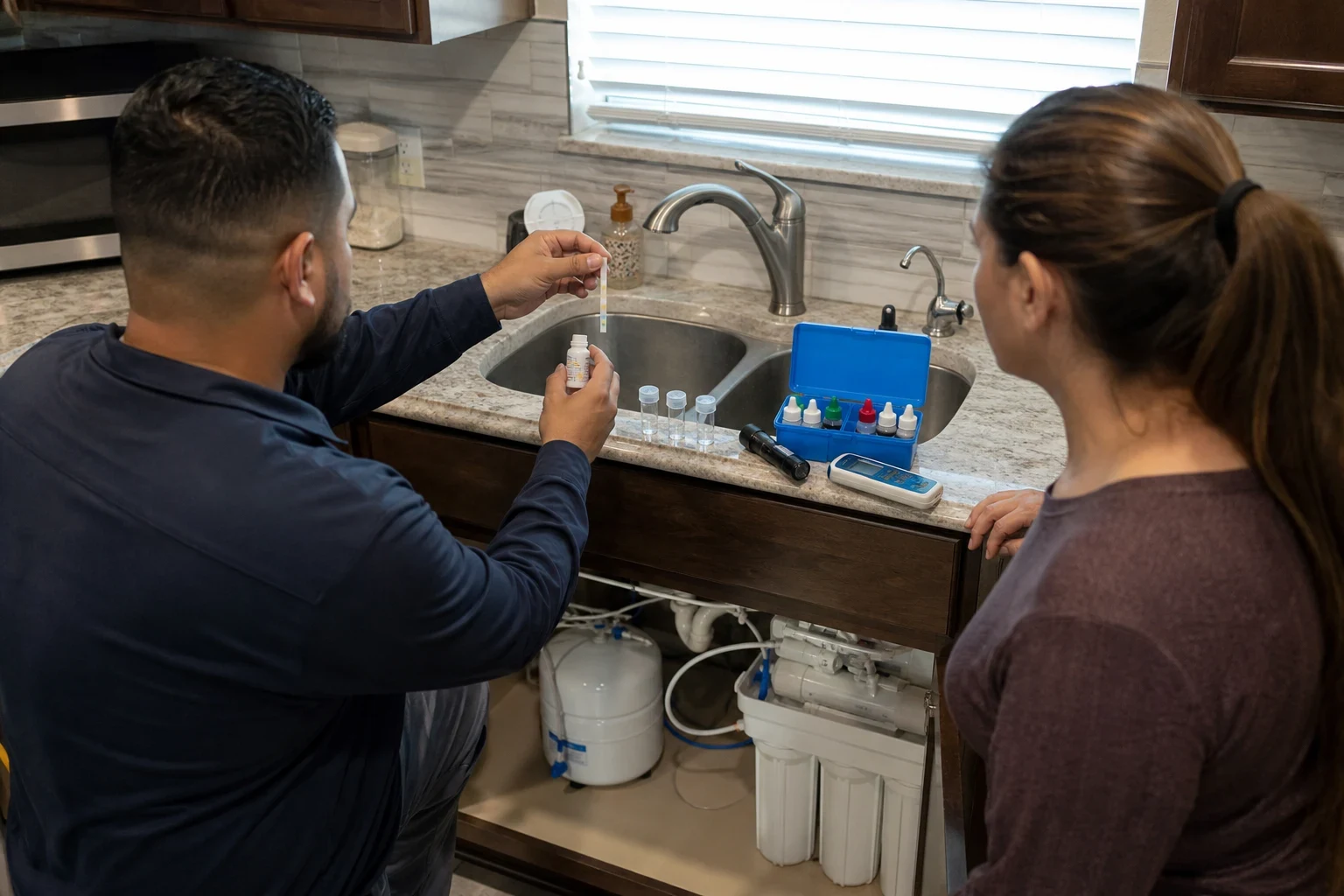
Water testing
We measure hardness, iron, chlorine, pH and dissolved solids at your tap, then tell you which treatment is worth buying and which is not.
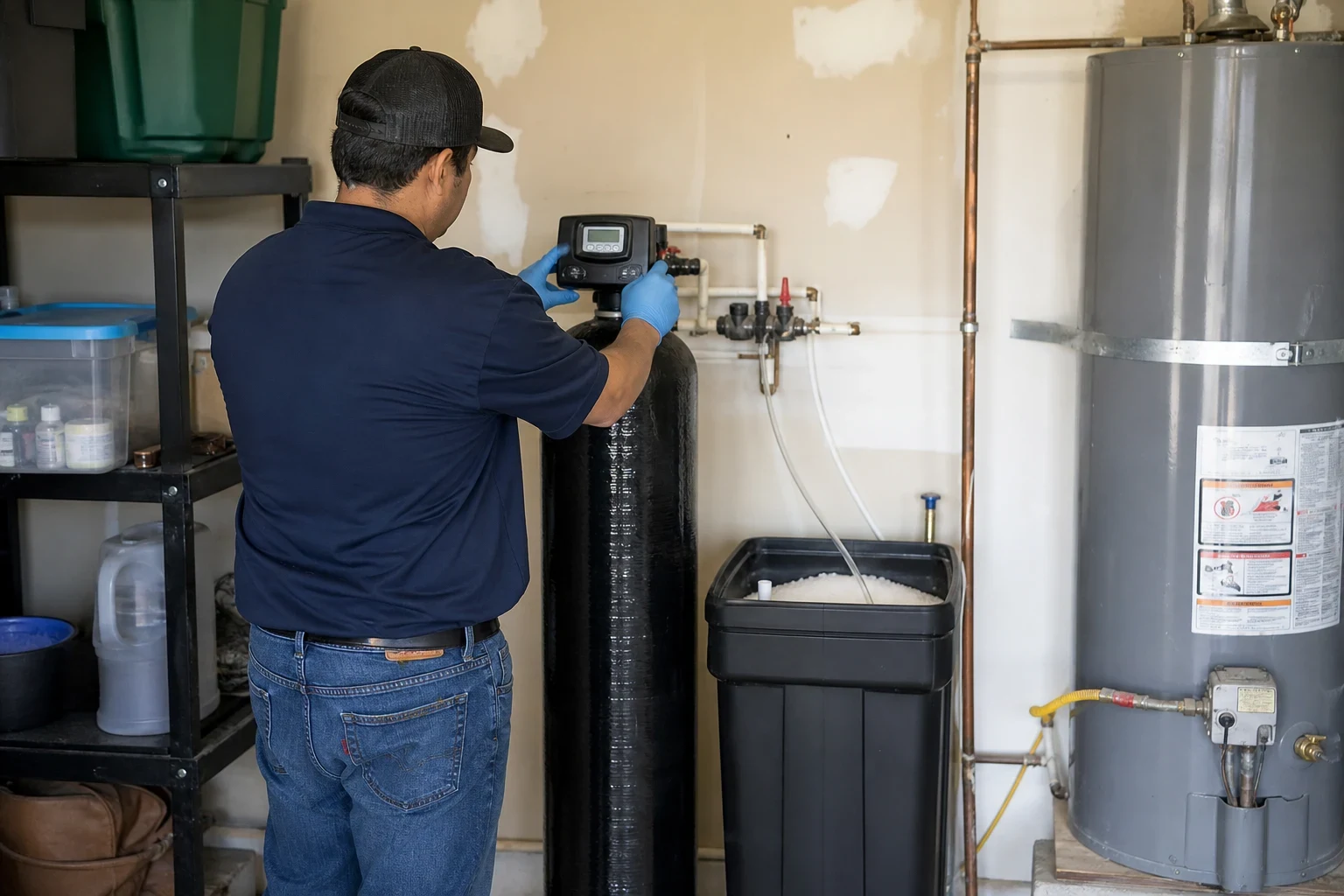
Water softeners
We test your hardness first, then size a softener to your water and household so salt, water and resin costs stay reasonable for years.
Iron and sediment filtration
We test for iron, manganese and grit, then fit a sediment or backwashing iron filter sized to your home's flow and upkeep budget.
Whole-house carbon filtration
Carbon media at the main line strips chlorine taste and odor from every tap, sized so the tank or cartridges last as long as they should.
Under-sink reverse osmosis
A multi-stage drinking water system under your kitchen sink, chosen by comparing the unit price with what filters and membranes cost over the years you own it.
Filter replacement and maintenance
Scheduled cartridge, membrane and housing service that keeps your filtration system working and stops small upkeep from turning into costly part replacements.
How a Job Runs From Test to Final Check
Once you approve an option, the install is usually finished in one trip. The steps below are the same on every job.
- 1
Water test at your home
We draw samples from a kitchen tap and, when it matters, from the point where water enters the house. We run on-site checks for hardness, iron, chlorine and TDS, and recommend a lab test for lead or other contaminants when your plumbing or source calls for it.
- 2
Options with real numbers
We explain what each reading means in plain terms, then lay out one or two options that fit. Each shows install cost, cartridge or media life and annual upkeep side by side, so the cheaper-to-own choice is easy to spot.
- 3
Installation
We isolate the water, install the housings or tanks with a bypass valve, connect drains with an air gap where needed, then flush new carbon until the water runs clear of fines.
- 4
Pressure test and walkthrough
We check every joint under full pressure, retest the treated water and show you the change schedule and how to swap a cartridge yourself if you prefer.
Where We Work
Our base is Hutchins, TX, and we drive to homes throughout the south Dallas area. Regular stops include Lancaster, Wilmer, DeSoto, Balch Springs and Seagoville. We also travel to Ferris, Mesquite, Duncanville, Glenn Heights and Red Oak.
- Hutchins
- Lancaster
- Wilmer
- DeSoto
- Balch Springs
- Seagoville
- Ferris
- Mesquite
- Duncanville
- Glenn Heights
- Red Oak
Living just outside these towns is often no problem. Give us your address on the phone and we will confirm coverage for testing, installs and filter service.
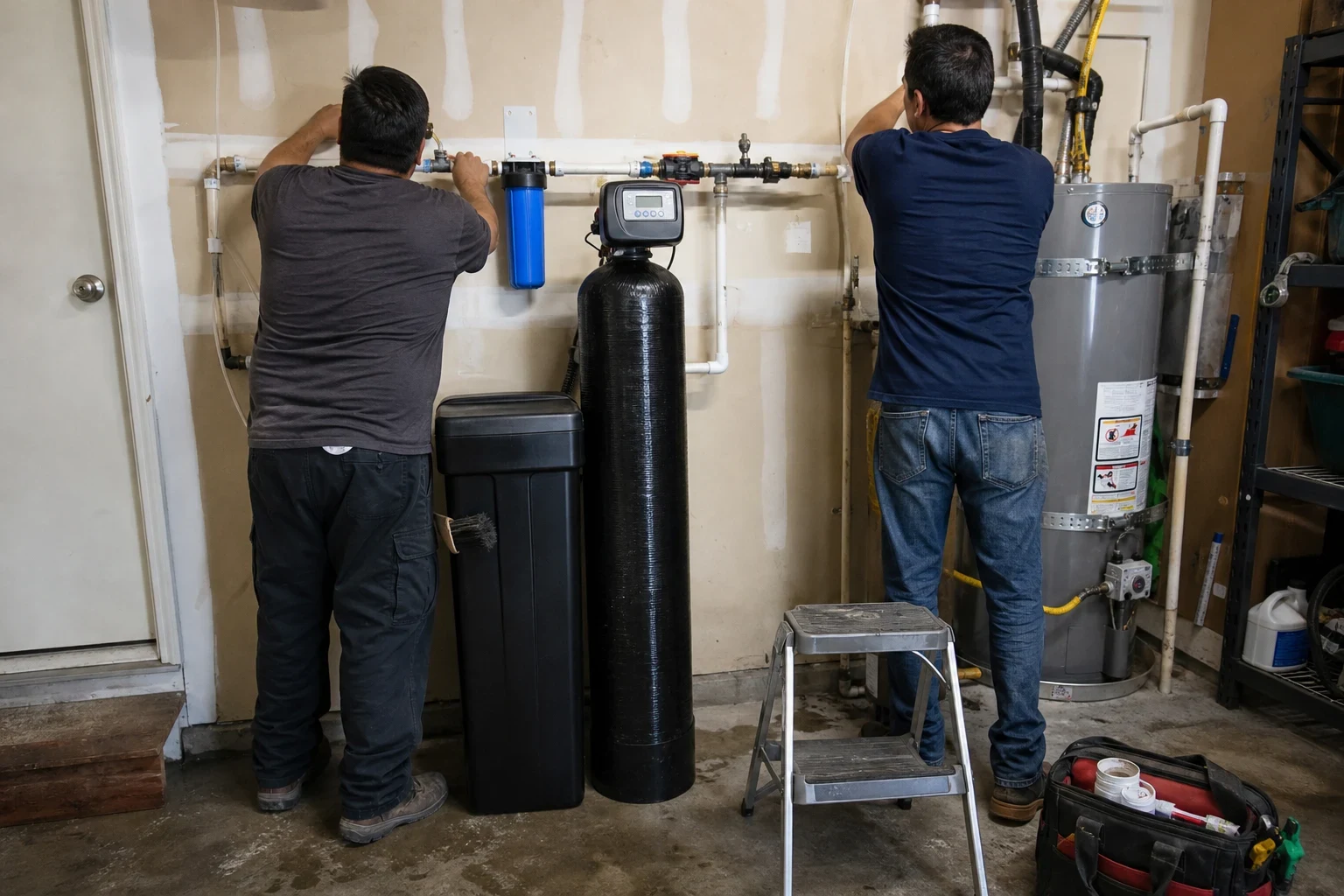
A Water Company That Starts With the Numbers
Water Filtration Hutchins is a family-owned company that installs and maintains treatment equipment for homeowners in Hutchins and the surrounding area. We built the business around one idea: you should know what a system will cost to own before you agree to buy it.
That means testing before recommending, quoting the replacement parts alongside the install, and choosing equipment that uses standard cartridges and media. A smaller system that solves the actual problem is usually the better buy, and we will tell you when that is the case.
- In business
- 4
- Warranty
- Lifetime warranty on the majority of parts
- Certifications
- NSF certified
What Homeowners Want to Know About Their Water
- Is it safe to drink water straight from my city tap?
- Texas public water systems are held to state and federal drinking water rules, and the large majority comply. People usually filter for better taste or smell, to deal with what their own plumbing adds, or simply for added confidence. Testing comes first, so what we suggest fits your actual water rather than the worst case.
- What causes a chlorine taste or smell at my faucet?
- Your utility adds chlorine or chloramine so the water stays disinfected as it travels through miles of mains, and a trace of it makes it to your faucet. Activated carbon takes out that taste and odor. Catalytic carbon handles chloramine better than the standard kind, so we find out which disinfectant your supplier uses before we price anything.
- Could the pipes in an older home put lead in my water?
- They can. Lead found at a tap nearly always starts inside the home, from old solder, brass faucets and valves, or a worn service line. A lab test shows whether it is present and how much. When it is, under-sink reverse osmosis is a practical fix for the water you drink and cook with.
- Does my home need a water softener?
- Only when a hardness test backs it up. We read hardness at your faucet in grains per gallon. If it is low enough that scale is a small nuisance, the ongoing salt, resin and regeneration water a softener needs will not pay off, and we will say so.
- How long do filters last before they need replacing?
- As a rule, sediment prefilters go three to six months, carbon block cartridges six to twelve, and RO membranes two to three years, depending on your water and usage. A whole-house carbon tank can run several years before it needs new media. Your schedule comes from your test results and the size of your household.
- Is whole-house or under-sink filtration the better fit?
- Whole-house carbon covers every faucet, shower and appliance, which matters if chlorine irritates your skin or the smell shows up all over the house. Under-sink reverse osmosis serves one faucet but removes much more, including dissolved solids and lead. Plenty of homes need just one, some use both, and we compare what each costs to run over time.
- Do reverse osmosis systems send water down the drain?
- Yes, some. The membrane uses part of the incoming water to flush away what it filters out. Current units with permeate pumps or improved membranes drain far less than older ones. We match the unit and tank to your household so the amount sent to the drain stays modest.
What Changes the Cost of a Filtration System
Every home gets its own quote, since water samples and plumbing layouts differ from house to house. The factors below shift the price the most, and we measure each one against how long the equipment will last and what it takes to keep it running.
Once we have tested your water and checked your plumbing, you receive a written estimate that lists install cost and expected yearly upkeep on separate lines. No charges get added later unless you approve them.
- Your test results
- A simple chlorine taste calls for a carbon stage. Iron, sediment or very hard water bring in oxidizing media, prefilters or a softener, and every added stage means more equipment and more upkeep.
- One faucet or the whole house
- Under-sink reverse osmosis covers drinking and cooking water at the kitchen sink, so the equipment costs less. A whole-house carbon tank on the main line serves showers, laundry and all the sinks. It costs more at the start, but its media can often go years before a change.
- Household size and flow
- We size tanks and housings to your peak demand in gallons per minute. Go too small and pressure sags when two showers run together, and the media wears out sooner.
- Main line location
- Lots of homes around here are built on slabs, with the main entering through a garage or outside wall. When that line is easy to reach, labor stays low; moving pipe or running a backwash drain takes longer.
- Choice of media and cartridges
- Catalytic carbon deals with chloramine better than ordinary granular carbon, at a higher price. Larger-capacity cartridges cost more apiece but are swapped less often, so they frequently break even or save money over time.
- Drain hookups and permits
- Equipment that backwashes or regenerates needs a drain with an air gap. Where local code calls for a permit on that hookup, we get it and put the fee in your estimate.
Find Out What Your Water Actually Needs
Start with a test at your home and a written estimate that shows both install cost and yearly upkeep. Then decide on your own schedule.