ServicesUnder-sink reverse osmosis
Reverse Osmosis Under the Kitchen Sink in Hutchins
Our under-sink reverse osmosis installs put a separate faucet at your kitchen sink for low-mineral water to drink and cook with. Before you commit, you see what the unit costs alongside the yearly price of its filters and membrane.
How reverse osmosis works and where it fits
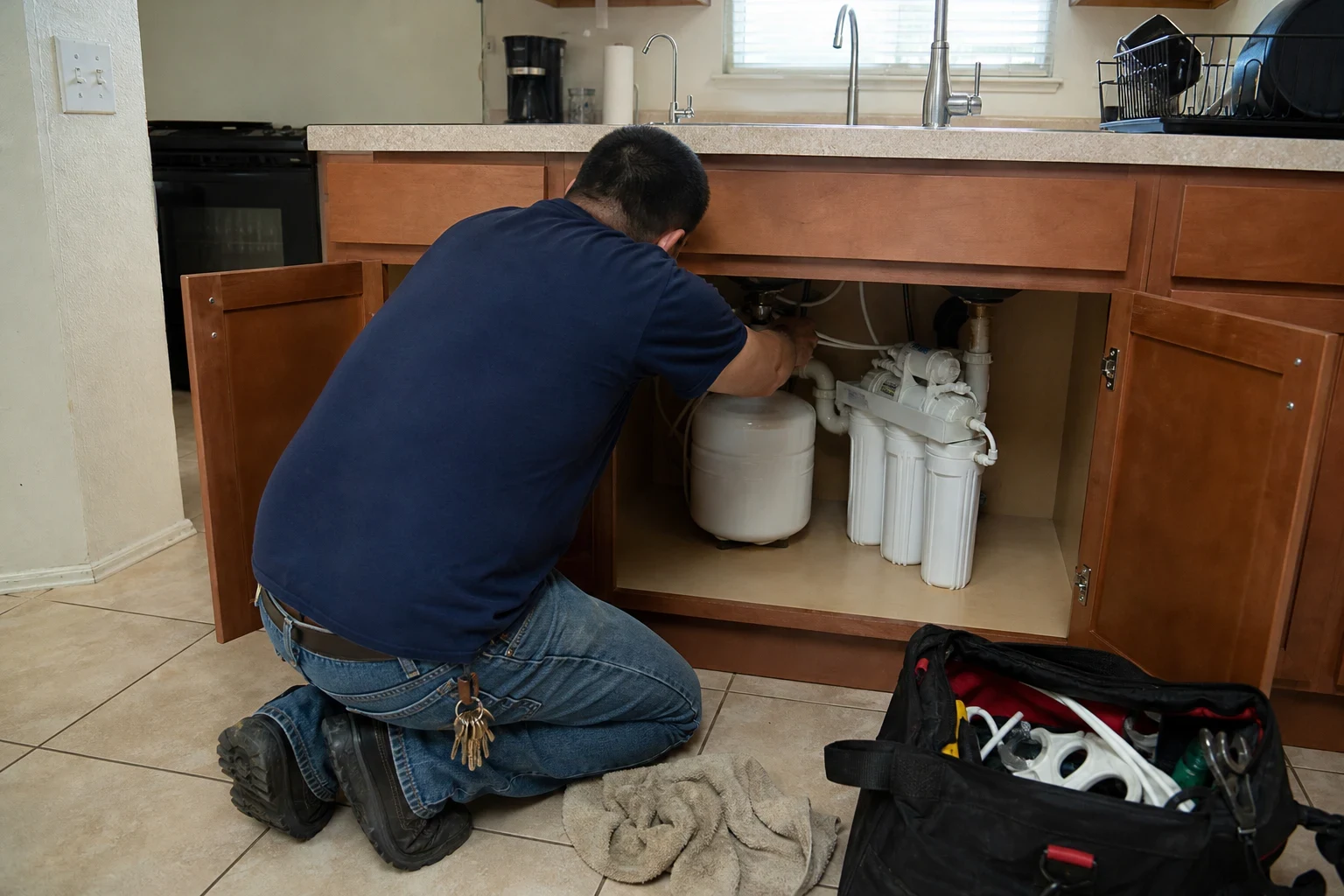
A reverse osmosis system forces water across a thin-film membrane whose openings are tight enough to reject dissolved solids such as lead, nitrates, fluoride and most salts. Ahead of the membrane, a sediment cartridge and a carbon block shield it from grit and chlorine. After it, a carbon post-filter cleans up the taste on the way to a separate faucet at your sink.
RO earns its place when the worry is what ends up in your glass and your cooking pot: lead that may leach from older solder or brass fittings, a high total dissolved solids reading, or a lab result you would like extra margin on. It treats one tap, not the whole house. If the issue is chlorine smell in the shower or orange stains in the tub, whole-house carbon filtration or iron and sediment filtration fits better, and we will say so.
We price systems on what they cost to own, not just to install. A cheaper unit with proprietary cartridges can cost more within three years than a sturdier one that takes standard 10-inch filters.
What the installation includes
- 01
Prefilter stages
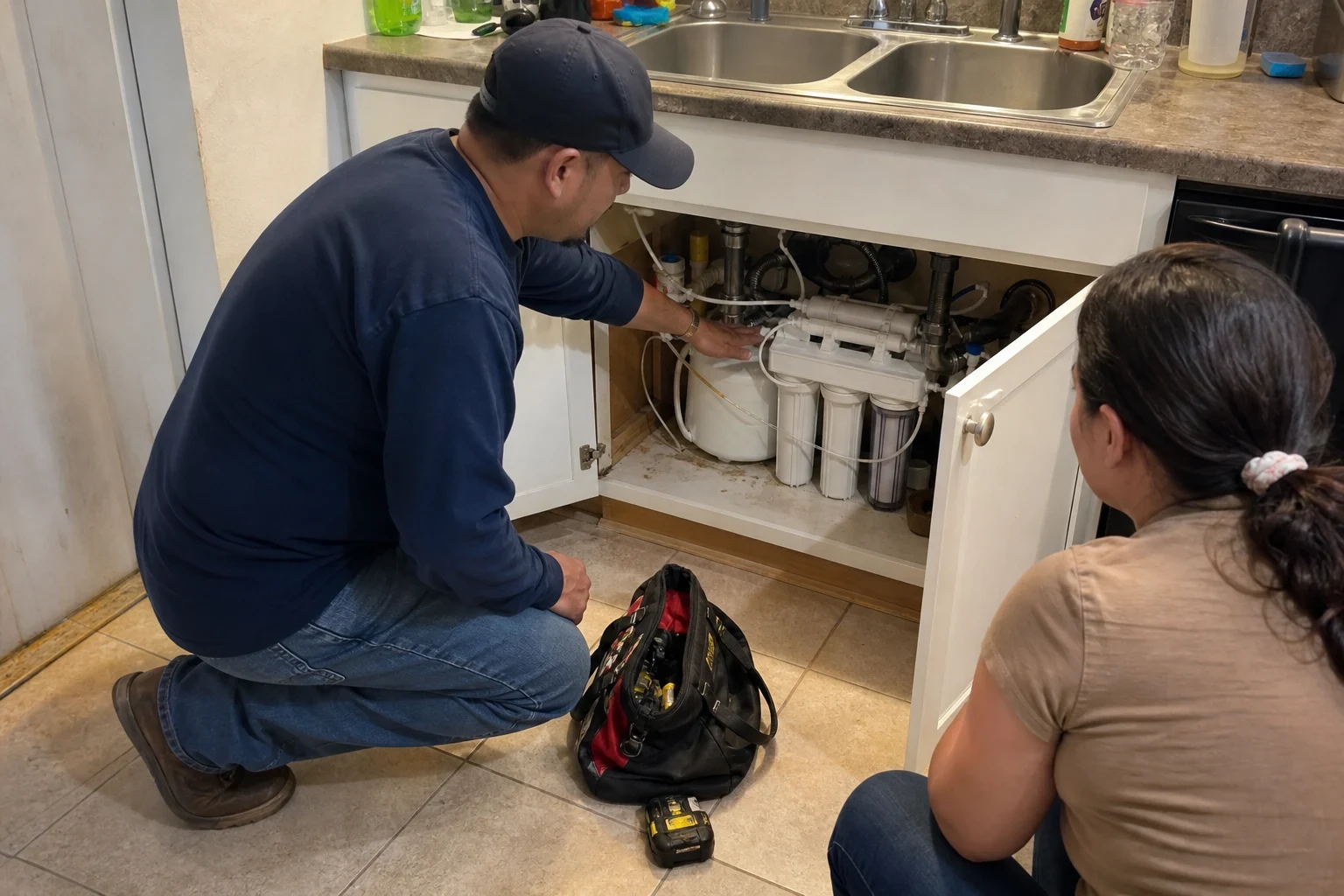
A sediment cartridge catches sand and scale, and a carbon block removes chlorine. Chlorine degrades thin-film composite membranes, so this stage is what lets the membrane reach its full service life.
- 02
RO membrane and housing
We fit the membrane sized to your household's daily drinking and cooking use. Oversizing wastes money, and undersizing leaves you waiting on the tank.
- 03
Storage tank or tankless unit
Most systems use a small pressurized tank under the sink. Where cabinet space is tight, we compare tankless models, which cost more up front but skip the tank's air bladder, a common failure point.
- 04
Dedicated faucet and drain connection
We mount a separate faucet on the sink or countertop and connect the reject line to the drain with a saddle above the trap, so wastewater cannot siphon back.
- 05
Pressure check and optional add-ons
Membranes need adequate inlet pressure to work efficiently. If yours runs low, we discuss a permeate pump, and we can add a remineralizing stage if you prefer the taste of some calcium and magnesium.
Questions about Under-sink reverse osmosis?
Call(972) 954-6119Signs an under-sink RO system is worth a look
Your home has older plumbing
Homes built before the late 1980s may have lead solder or older brass fixtures. RO removes most lead at the tap where you fill glasses and pots.
A test showed high dissolved solids
A TDS reading on the high side often shows up as flat or salty-tasting water and white spots on dishes. RO brings that number down sharply at the kitchen tap.
You buy bottled water every week
Cases and delivery jugs add up. Over a few years, a well-sized RO system with standard filters usually costs less per gallon.
Coffee, tea and ice taste off
Minerals and residual disinfectant change flavor. Cleaner water also slows scale in kettles and coffee makers.
You want a margin beyond compliance
Public water can meet every standard and you may still want more assurance for a baby's formula or a family member's health. RO is a sensible step for that.
What to expect, step by step
- 1
Testing comes first
We pick the system from measured water testing results, not assumptions. If those results call for another solution, we tell you before any sale.
- 2
A written 5-year cost estimate
Your itemized estimate covers the unit, the installation and how often the prefilters, membrane and post-filter will need replacing, so every option is compared the same way.
- 3
The installation
A typical install runs a couple of hours. We empty the cabinet, cover the floor, drill a faucet hole when one is needed, hook up the cold line and drain, then flush the new filters and membrane so your first glass tastes clean.
- 4
Final checks and a walk-through
We measure pressure and TDS at the new faucet, look over each fitting for leaks and show you how to remove the cartridges. We clean up and haul the packaging away.
What moves the price of an RO system
The installed price is only part of the cost. Filters and membranes are consumables, and their price and lifespan decide what you spend over the years. We lay out both so the choice still makes sense later.
- Filter format
- Standard 10-inch cartridges are widely available and usually cheaper over time. Proprietary twist-in filters are convenient but lock you into one brand's pricing.
- Tank or tankless
- Tankless units cost more to buy but free up cabinet space and avoid tank replacement. Tank systems are simpler and less expensive up front.
- Water quality
- High sediment or chlorine shortens prefilter life, which raises yearly upkeep. Testing tells us which way your water leans.
- Countertop and access
- Granite or quartz needs a different drilling approach than laminate, and a cramped cabinet or disposal in the way adds time.
- Add-ons
- A permeate pump, remineralizing stage or refrigerator line each add parts and labor. We list them separately so you can skip what you do not need.
Reverse osmosis questions we hear
How often do the filters need changing?
Prefilters typically last six to twelve months, depending on how much sediment and chlorine your water carries. The membrane usually runs two to three years when the prefilters are changed on time. Our filter replacement and maintenance service can keep that schedule for you.
How much water goes down the drain?
The membrane needs a steady rinse stream to carry rejected solids away, so part of the incoming water always leaves through the drain line. Newer high-efficiency membranes and a permeate pump shrink that share noticeably. Because the system only feeds drinking and cooking water, the total is small next to a shower or a load of laundry.
Will it lower my water pressure?
Only at the dedicated faucet, which flows more slowly than your main tap. Your kitchen faucet, showers and appliances are unaffected because the system is connected only to the cold line under the sink.
Does RO strip out healthy minerals?
Yes, it removes most calcium and magnesium along with everything else. Most people get those minerals from food. If you prefer the taste of mineral water, a remineralizing cartridge adds a small amount back.
Can I connect it to my refrigerator?
Usually, yes. We run a line from the RO tank to the fridge's water and ice supply. Long runs can reduce flow, so we check the route before quoting it.
See what an RO system costs to own, not just buy
We serve homes in Hutchins, Lancaster, Wilmer and nearby towns. Start with a test, and we will show you the install price and the yearly filter cost side by side.